CRM + Lifecycle Marketing Case Study
The Repeat Purchase Engine
A retention strategy designed to move Bones Coffee customers from first purchase to second purchase, and only then toward subscription.
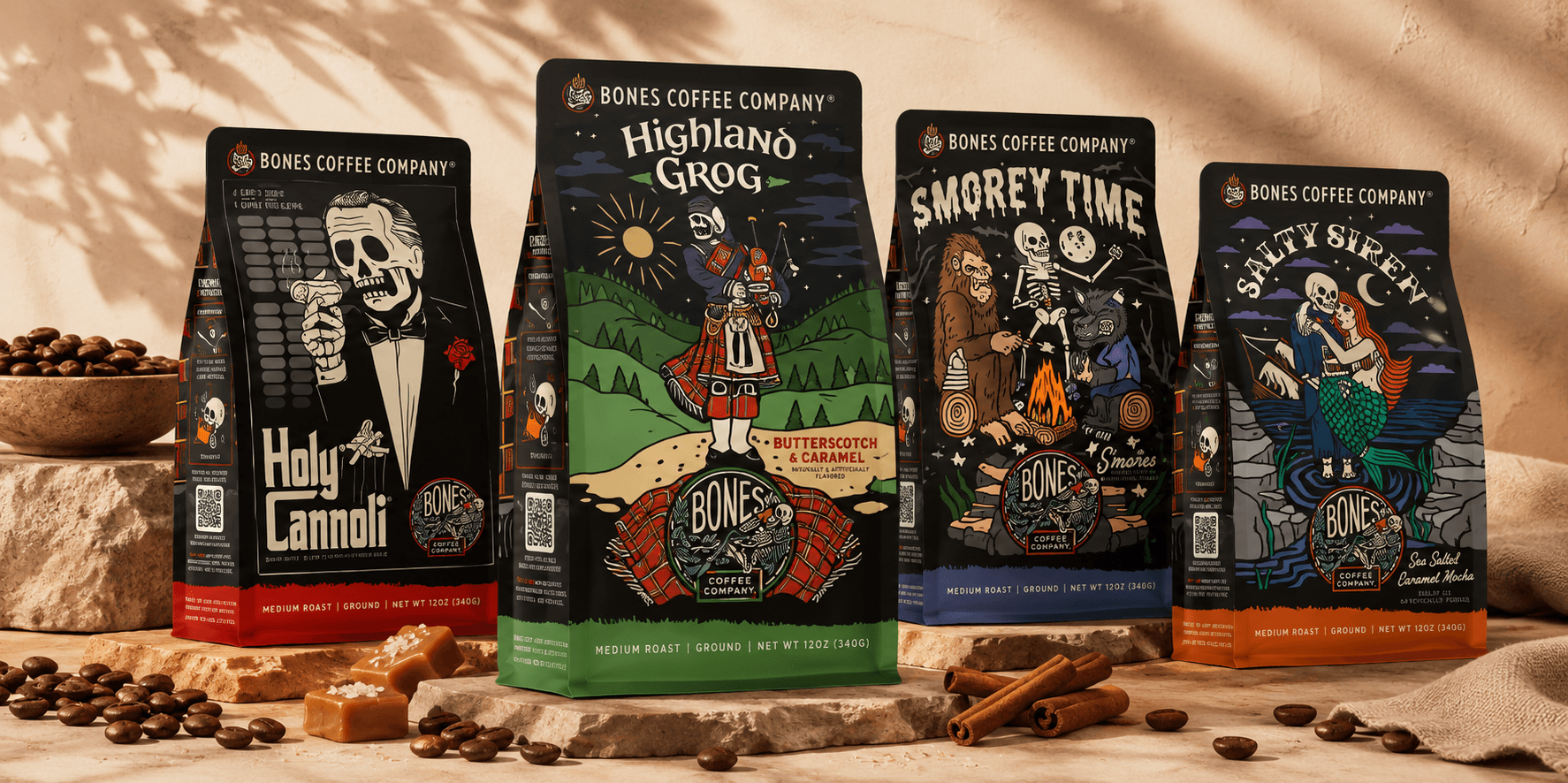
Independent portfolio strategy. Commercial figures and performance scenarios are illustrative planning assumptions, not achieved Bones Coffee results.
01 / Business Problem
The first purchase is not the retention win.
Bones has already done the difficult part when a customer discovers an unusual flavor and places a first order. The real retention opportunity begins after that experience: can the brand turn initial curiosity into repeat behavior?
01
First Purchase
Acquisition succeeded. Curiosity converted.
02
Experience
The customer decides whether the product fits their routine.
03
Second Purchase
The strongest early signal that preference is becoming habit.
04
Subscription
Commitment becomes credible after preference has been proven.
Pushing subscription too early asks for commitment before the customer has proven preference.
02 / Journey Diagnosis
Where the customer journey actually breaks.
The strategy begins with observable customer-journey evidence, then maps where CRM can remove friction and create a better path to repeat purchase.
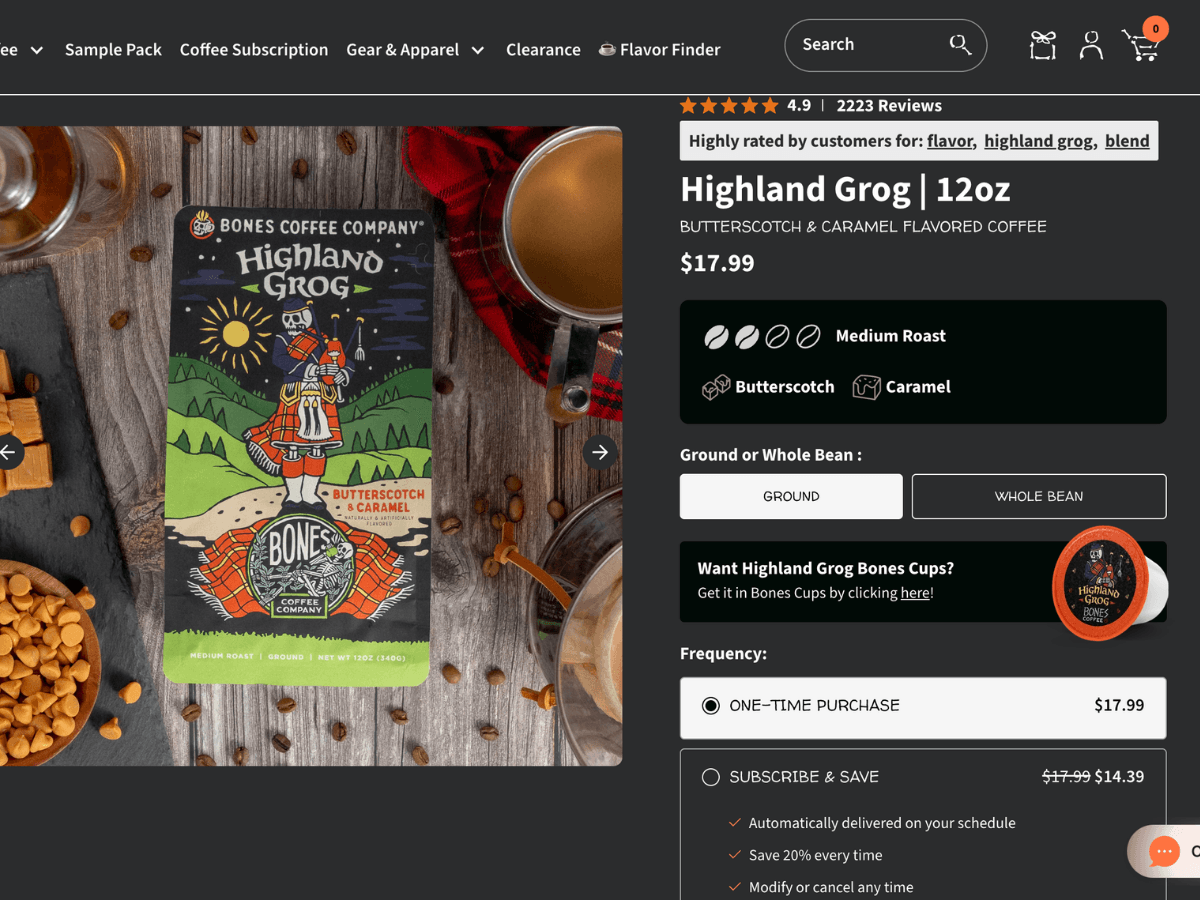
Observed Evidence 01
Strong purchase path
The brand makes product discovery and add-to-cart behavior clear. Acquisition and product interest are not the only problem to solve.
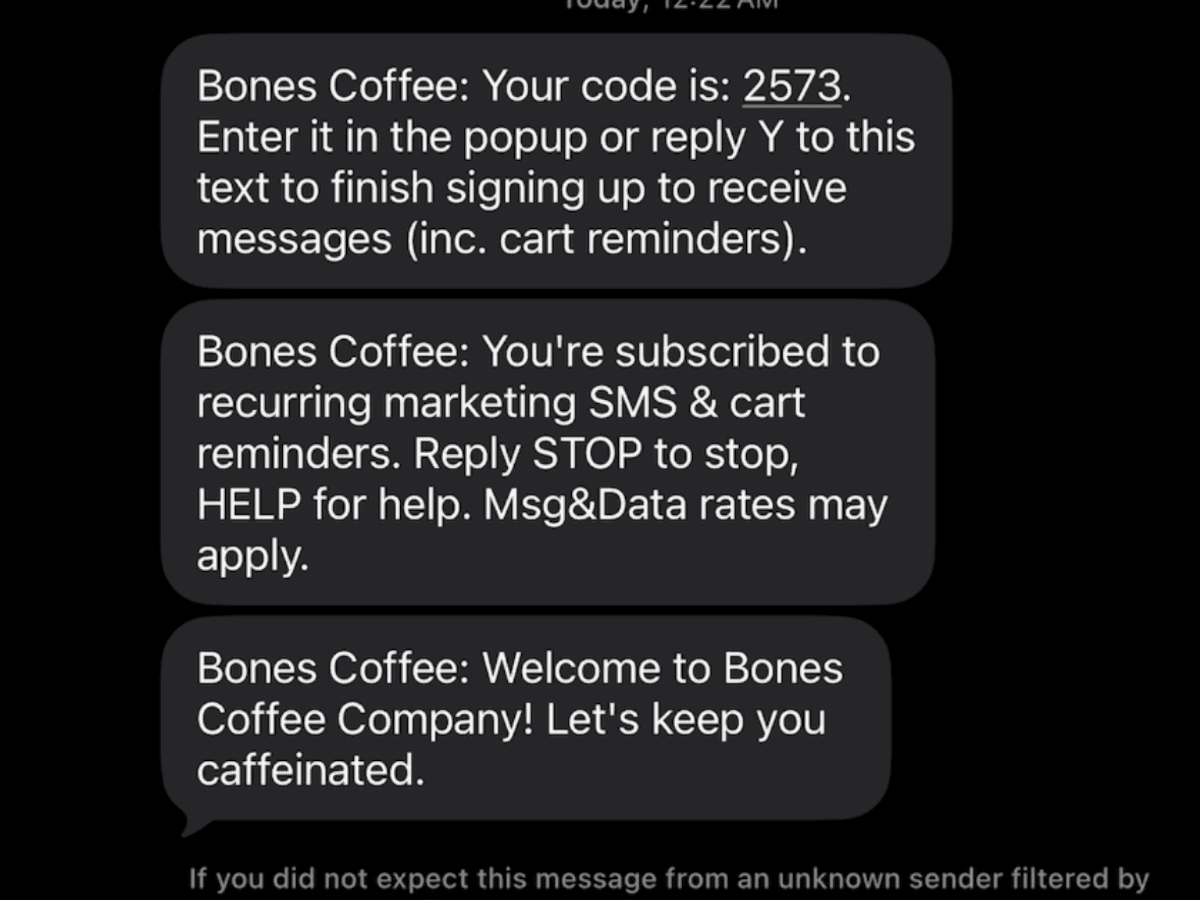
Observed Evidence 02
SMS onboarding appeared, email onboarding did not
In the observed sign-up journey, SMS onboarding was received while a welcome email was not observed. That creates a credible lifecycle opportunity to extend flavor discovery into email.
The audit suggests the biggest opportunity is not another acquisition message. It is a stronger bridge from product experience to reorder.
Discover
What makes this coffee different?
Distinctive flavors create interest, but choice can also create uncertainty.
Opportunity: flavor discovery.
Consider
Which flavor is right for me?
Customers need help navigating variety without decision overload.
Opportunity: capture preference signals.
Purchase
Is this worth trying?
The first order is the acquisition conversion, not yet a retention relationship.
Opportunity: reinforce confidence.
Experience
Did I actually like it?
Product experience determines whether interest turns into affinity.
Opportunity: reinforce first-order preference.
Reorder
Same flavor or something new?
The customer needs the right reminder at the right moment.
Opportunity: replenishment and recommendations.
Subscribe
Is this part of my routine?
Subscription makes sense once preference and repeat intent are visible.
Opportunity: commitment after affinity.
The largest lifecycle opportunity sits between EXPERIENCE and REORDER.
03 / Lifecycle Benchmark
What category leaders get right about retention.
Competitor 01
Death Wish Coffee
Retention works harder when subscription is positioned as ongoing value rather than only an automatic reorder.
Key learning
Subscription as membership and value.
Competitor 02
Chamberlain Coffee
Brand personality stays active after acquisition instead of disappearing once the customer converts.
Key learning
Brand-led acquisition and repeat engagement.
Competitor 03
Trade Coffee
Preference becomes a useful data signal that shapes what the customer sees next.
Key learning
Preference-driven personalization.
04 / Behavioral Segmentation
Lifecycle tells us when. Behavior tells us what to say.
Primary Lifecycle
Recovery State
Lapsed Customer
A separate state for customers whose purchase behavior has slowed or stopped. The objective is reactivation, not immediate subscription.
Flavor Preference Signal
Behavioral overlay: Flavor Explorer
This overlay can coexist with First-Time Buyer or Repeat Buyer. It gives CRM a signal for what to recommend next without replacing lifecycle stage.
| Segment | Objective | Primary KPI |
|---|---|---|
| Browser | Convert discovery into first order | First-purchase conversion |
| First-Time Buyer | Generate second purchase | Repeat purchase rate |
| Repeat Buyer | Build habit and expand basket | Purchase frequency |
| Subscriber | Retain relationship | Retention and churn |
| Lapsed | Reactivate | Reactivation rate |
05 / Lifecycle Architecture
One lifecycle. Six coordinated flows.
Each flow has a specific trigger, timing rule, job, and KPI. The system changes what comes next based on what the customer has already demonstrated.
Flow 01
Welcome
Flow 02
Post-Purchase
Flow 03
Replenishment
Flow 04
Flavor Discovery
Flow 05
Subscription
Flow 06
Win-Back
Every flow has one job. The next message depends on what the customer has already demonstrated.
06 / Hero Retention Flow
The hero flow: first purchase to second purchase.
First Order
Example: Highland Grog.
Experience Window
Give the product time to become a real routine signal.
Preference Reinforcement
Acknowledge what they chose.
Flavor Discovery
Recommend adjacent flavors.
Replenishment
Ask "Running low?" near the expected usage window.
Second Purchase
Only now does subscription become more relevant.
07 / Creative Execution
What the strategy looks like in the inbox.
The three email concepts are shown as outputs of the lifecycle strategy.
08 / Experiment Roadmap
Test the highest-leverage assumptions first.
Experiment 01
Replenishment Timing
Does sending closer to expected depletion improve second-purchase conversion?
- Change
- Earlier vs expected depletion window
- Audience
- First-time buyers
- Primary KPI
- Second-purchase rate
Experiment 02
Preference-Based Recommendations
Do adjacent flavor recommendations outperform generic best sellers?
- Change
- Affinity logic vs bestseller logic
- Audience
- Flavor Explorers
- Primary KPI
- Click-to-purchase rate
Experiment 03
Subscription Timing
Does delaying the subscription message until after repeat intent improve conversion quality?
- Change
- First-order vs second-order timing
- Audience
- Repeat-ready customers
- Primary KPI
- Subscriber conversion and retention
09 / Measurement + Business Impact
Measure behavior, not just inbox engagement.
Engagement
- Open rate
- Click-through rate
- Click-to-open rate
Behavior
- Second-purchase rate
- Reorder rate
- Time to second purchase
Retention
- Purchase frequency
- Subscriber conversion
- Lapsed reactivation
Email engagement is a signal. Repeat purchase is the outcome.
Illustrative Working Model
+$48K
Illustrative incremental repeat-purchase revenue opportunity under a defined planning scenario.
Assumption Logic
The model should make its inputs visible so the business-impact number reads as a transparent scenario, not a claimed result.
Eligible customers × incremental second-purchase lift × average order value = illustrative incremental revenue
10 / Strategic Recommendation
Build the habit before asking for commitment.
Second order first.
Then Subscribe & Save.
Bones does not need to push every first-time buyer toward subscription. It needs to build enough preference and habit that subscription becomes the obvious next step.
11 / Limitations
Strategy, not live campaign results.
Scope
- Independent portfolio case study.
- CRM flows were not implemented in a live Bones Coffee account.
- Experiments were not run.
- First-party CRM and customer-level data were unavailable.
- Observed journey evidence reflects the audit experience, not comprehensive brand-side analytics.
- Projected metrics and commercial scenarios are illustrative planning assumptions.
The strategy is designed to show how lifecycle thinking can connect customer preference, timing, creative, experimentation, and commercial outcomes into one retention system.