Speculative Integrated Campaign
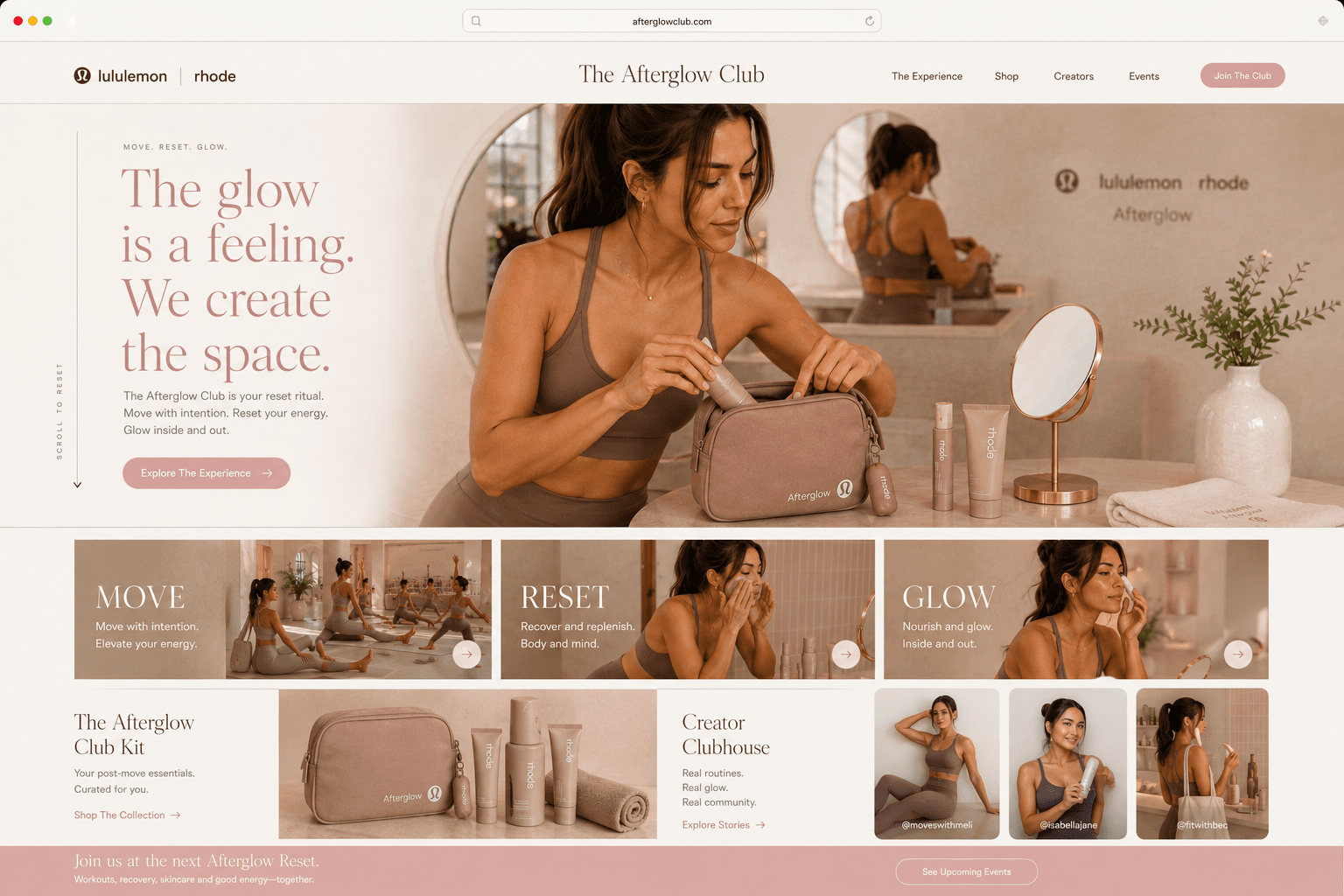
The Afterglow Club
A lululemon × rhode campaign built around an overlooked wellness moment: the transition immediately after movement.
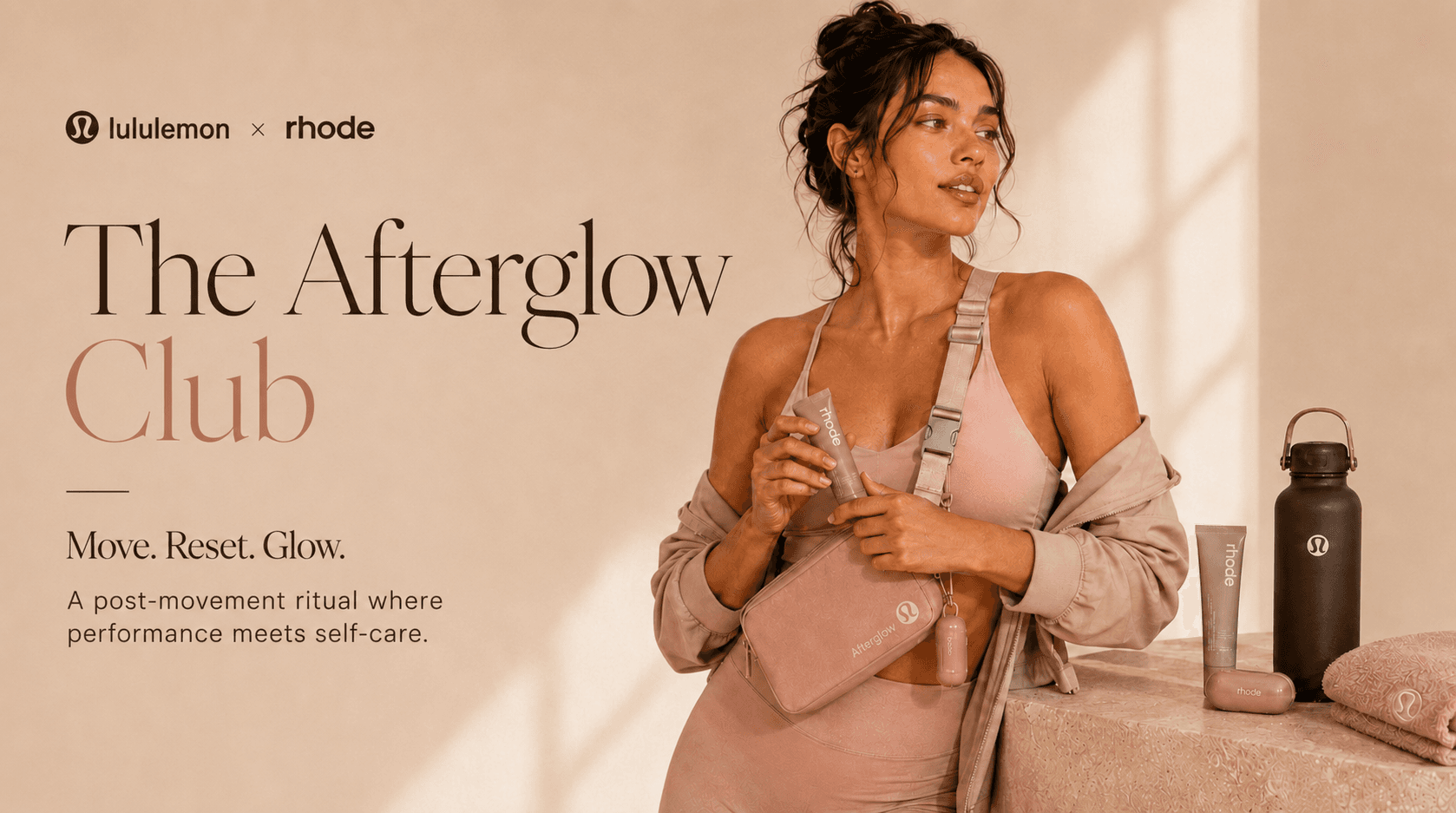
Independent speculative portfolio concept. Not commissioned, affiliated with, or endorsed by lululemon, rhode, or e.l.f. Beauty.
01 / Business Challenge
A strong brand. A changing growth story.
lululemon remains a global leader in premium performance apparel, but the growth picture in its core Americas business has softened. The strategic challenge is to create renewed cultural relevance and incremental demand among younger wellness consumers without diluting the equity lululemon already owns in movement, technical performance, and community.
How can lululemon create renewed cultural relevance and incremental demand among younger wellness consumers without diluting what the brand already stands for?
The opportunity:Don't compete for another moment during the workout. Own what happens next.
02 / Research + Brand Audit
Why the post-movement moment?
Three signals pointed toward the same strategic opening: wellness is expanding beyond fitness, beauty and wellness are converging, and the two brands bring complementary rather than overlapping strengths.
Wellness is becoming a lifestyle, not a category.
Gen Z and millennials represent roughly 36% of the U.S. adult population but drive more than 41% of annual wellness spending.
Beauty + wellness are converging.
The research identifies continued blurring between beauty and wellness, with complementary partnerships creating new opportunities for relevance. Social media also plays a major role across Gen Z's shopping journey.
rhode brings cultural demand, not just aesthetic fit.
rhode generated more than $500M in global retail sales in FY2026 and reached the #1 beauty brand ranking at Sephora North America.
- Movement
- Technical performance
- Product innovation
- Community
- Physical experiences
Brings to the campaign: credibility in the MOVE moment and the ability to turn the idea into a functional product and community experience.
- Skincare routines
- Beauty culture
- Social-first storytelling
- Creator relevance
- Product desirability
Brings to the campaign: credibility in the GLOW moment and a routine-led behavior consumers already understand.
Strategic white space: Movement → Transition → Wellbeing. Turn the post-movement reset into a recognizable, useful and shareable ritual.
03 / Consumer
Meet the Ritual Optimizer.
Gen Z wellness consumers in their 20s don't experience fitness, skincare, style and wellbeing as separate categories. They move between them throughout the same day.
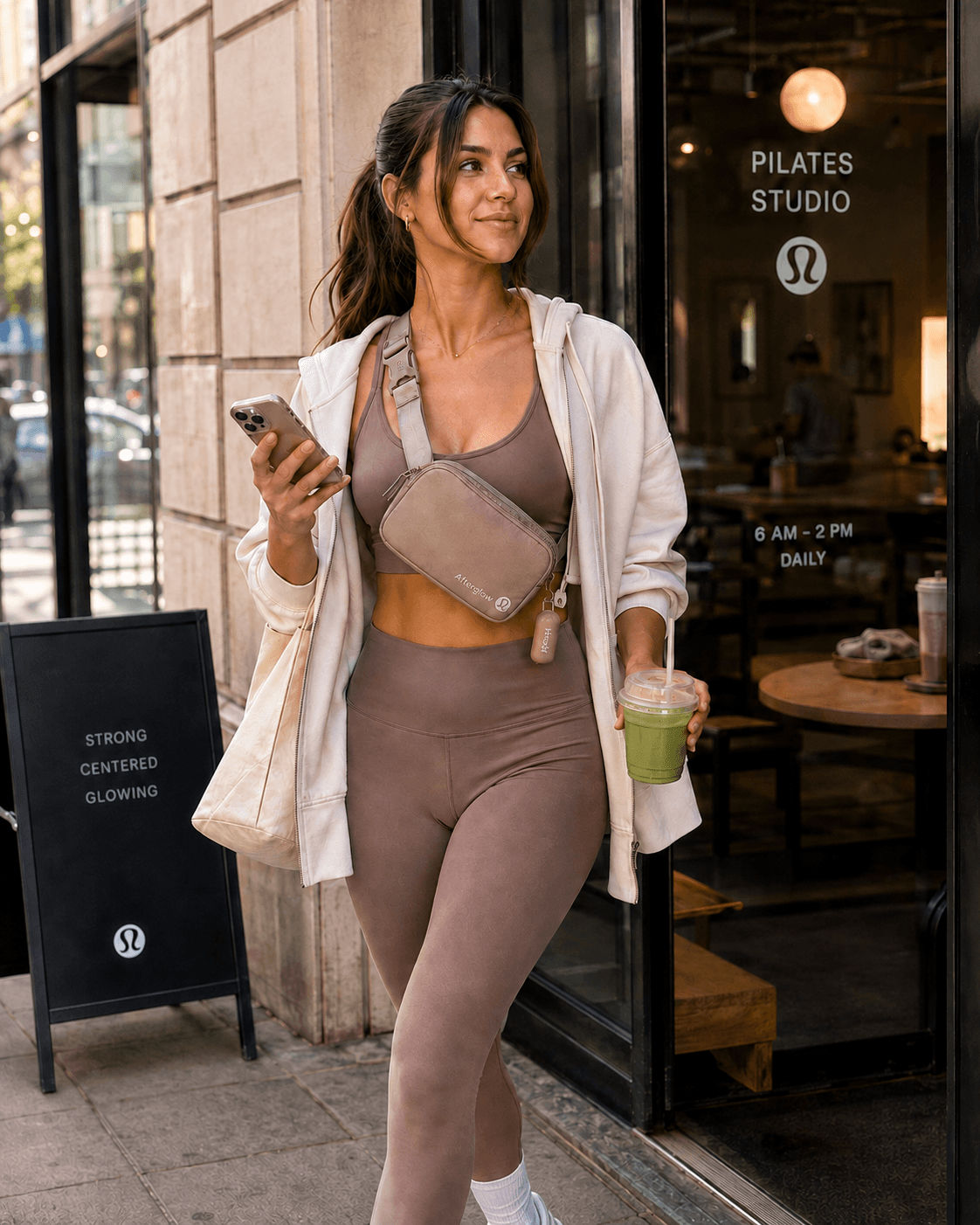
“She isn't dressing only for the workout. She's dressing for the entire day around it.”
The tension: She has products for the workout. She has products for skincare. The transition between them is still fragmented.
04 / Consumer Insight
The workout ends. The routine doesn't.
The moment immediately after movement isn't only about recovery. It's a transition—and that transition can become a reset ritual.
05 / Strategic Opportunity
Don't compete for more of the workout. Own what happens next.
lululemon gains
- A new wellness occasion beyond the workout
- Fresh creator and beauty adjacency
- A new accessories story
- Cultural conversation anchored in existing brand equity
rhode gains
- A credible movement-adjacent occasion
- Access to lululemon's physical community
- Cross-category discovery
- A new context for product trial
Partnership logic: Neither brand has to become the other. Their difference is what makes the collaboration useful.
06 / Campaign Platform
THE AFTERGLOW CLUB
Brand lead: lululemon
Shared territory: lululemon × rhode
Brand lead: rhode
07 / Hero Product
Make the idea tangible.
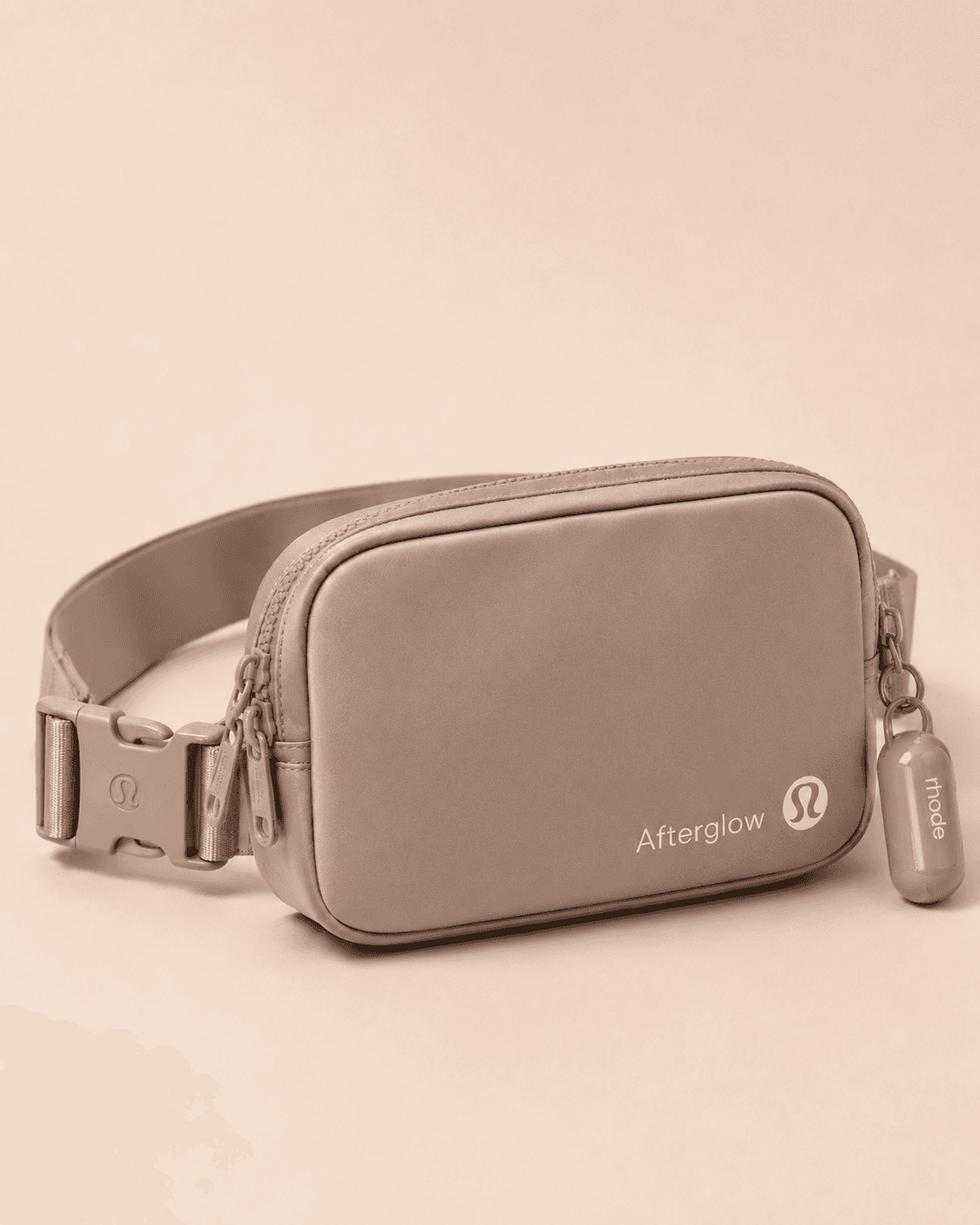
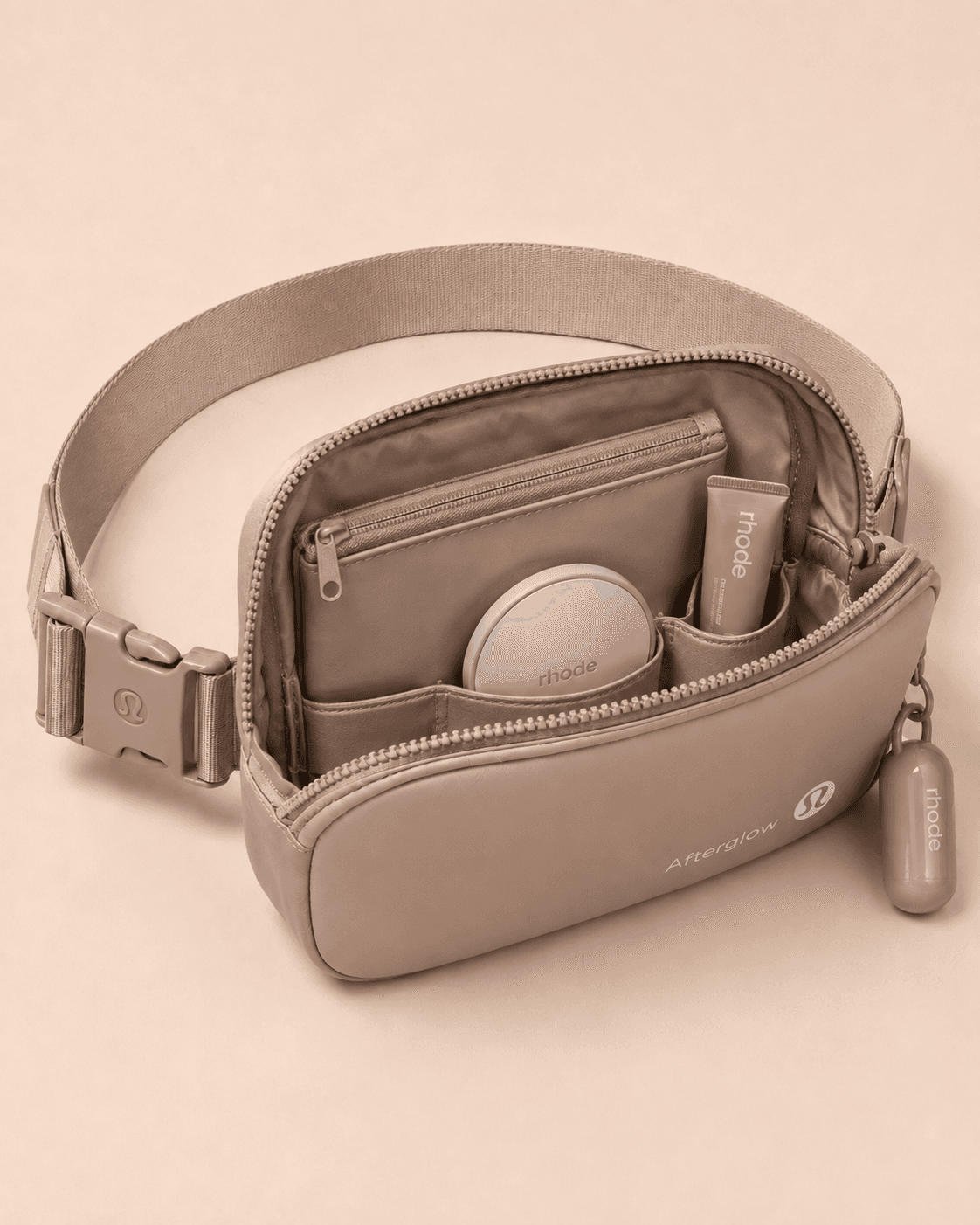
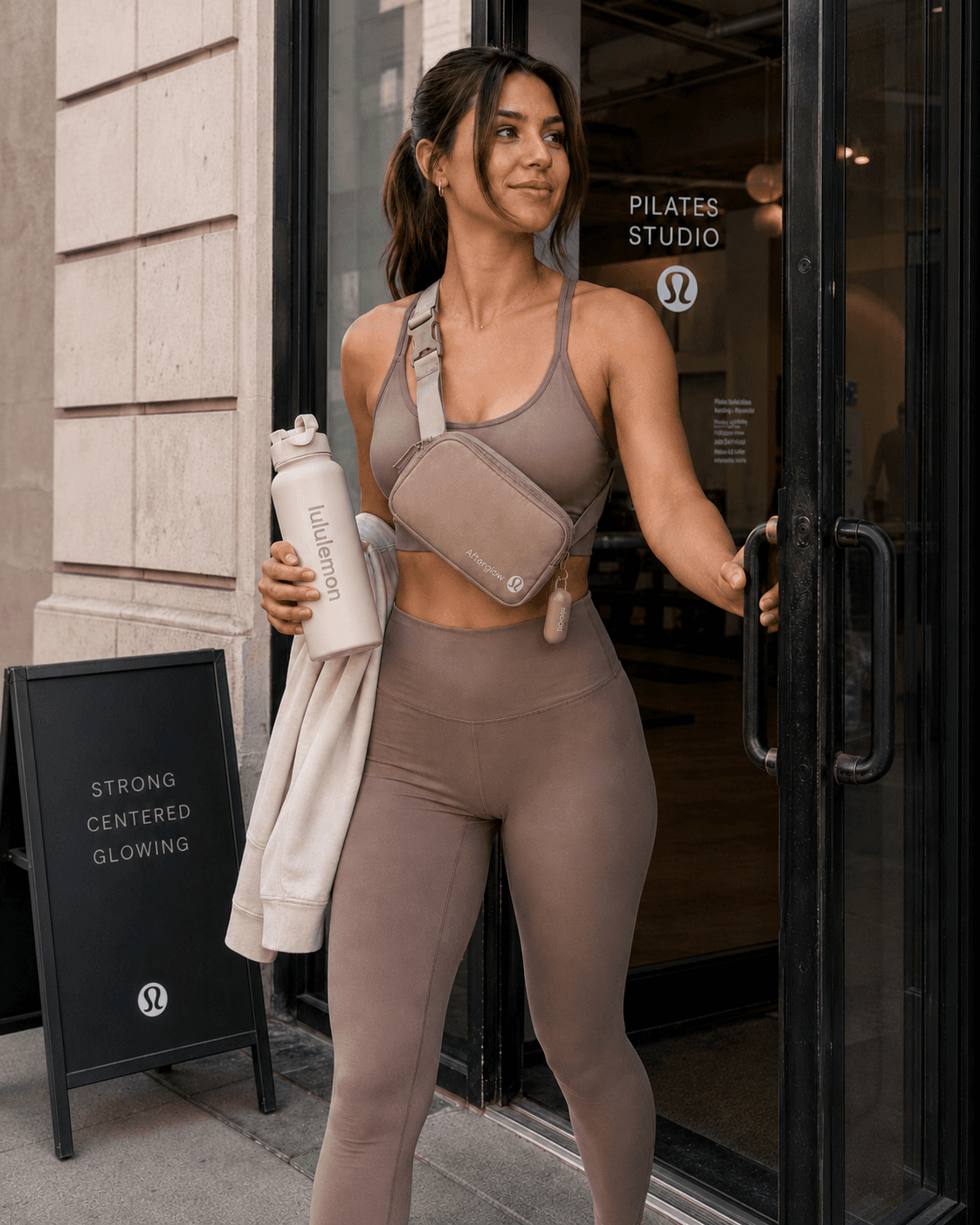
The Afterglow Belt Bag is a limited-edition lululemon belt bag redesigned around the essentials consumers reach for between their workout and the rest of their day.
Commercial figures are speculative planning assumptions created for this case study.
08 / Creator Strategy
Don't ask creators to promote it. Ask them to live it.
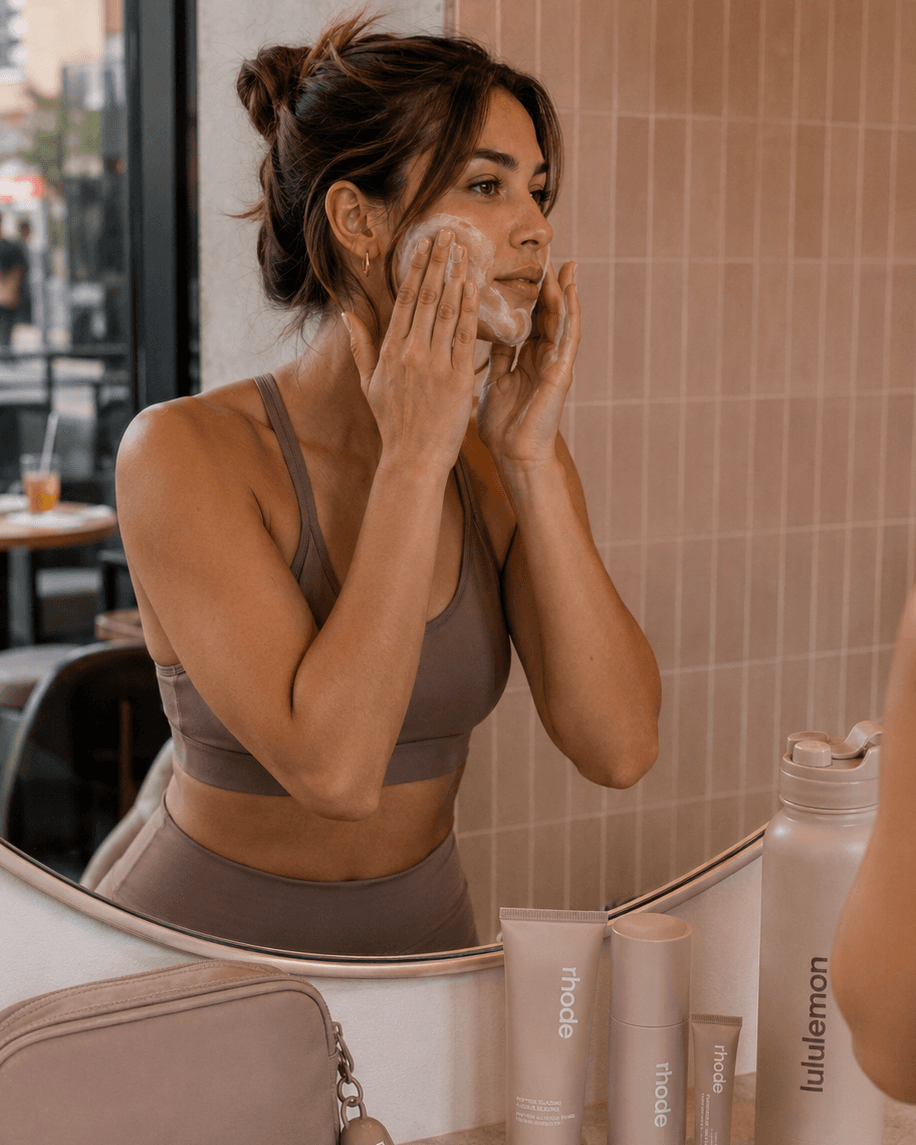
Each creator answers one question: Where do you go after movement?The framework stays consistent, but the routines don't have to.
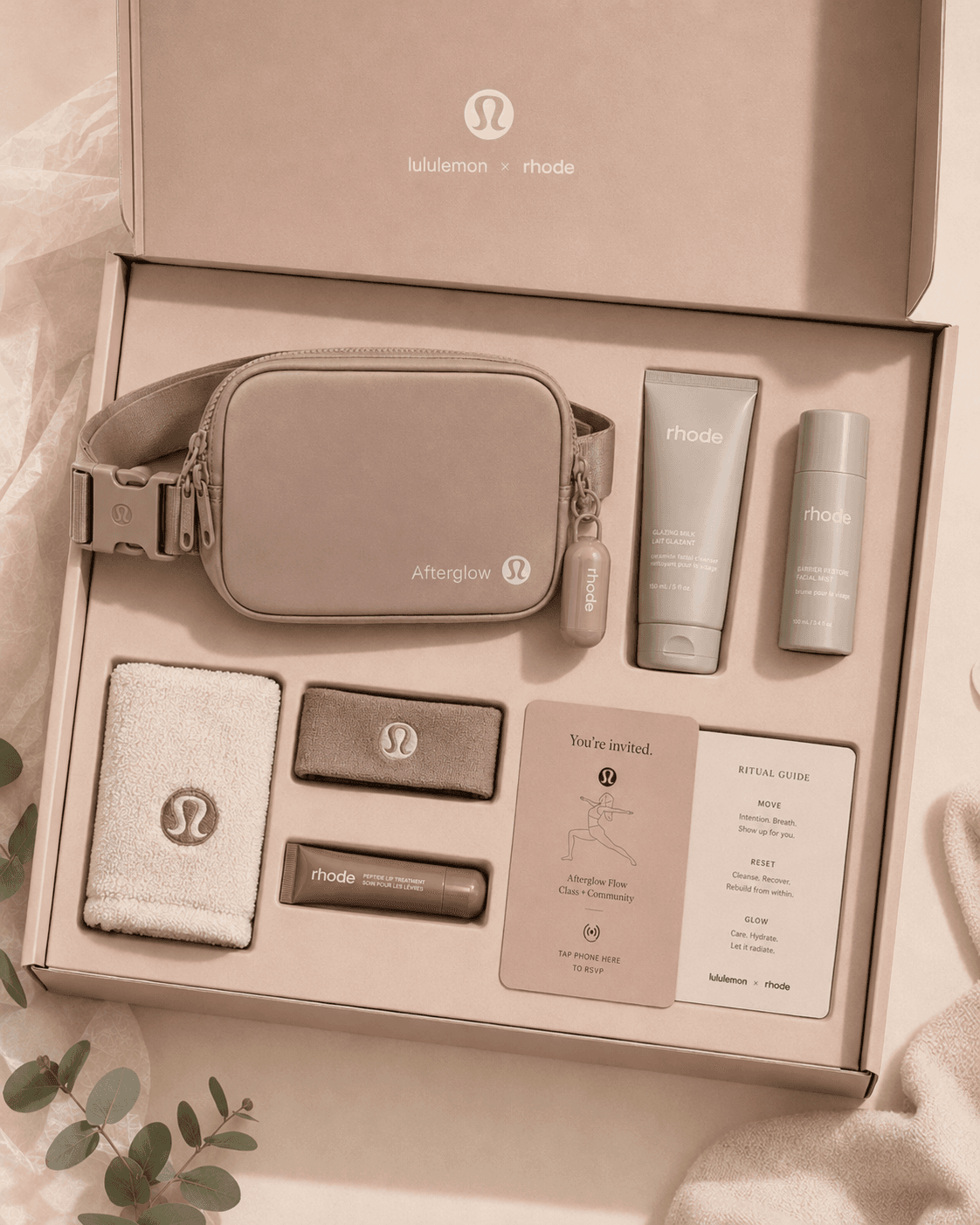
The Afterglow Reset Kit
A seeding experience designed to introduce the behavior first and product second.
Audience fit · Location · Engagement quality · Content style · Median views · Brand alignment—not follower count alone.
“Show us your real transition.”
#TheAfterglowClub · #MoveResetGlow
Top-performing creator content becomes native-feeling campaign media.
09 / Experience
Experience the Reset.
Afterglow Reset is a movement-to-skincare experience that lets consumers physically move through Move → Reset → Glow.

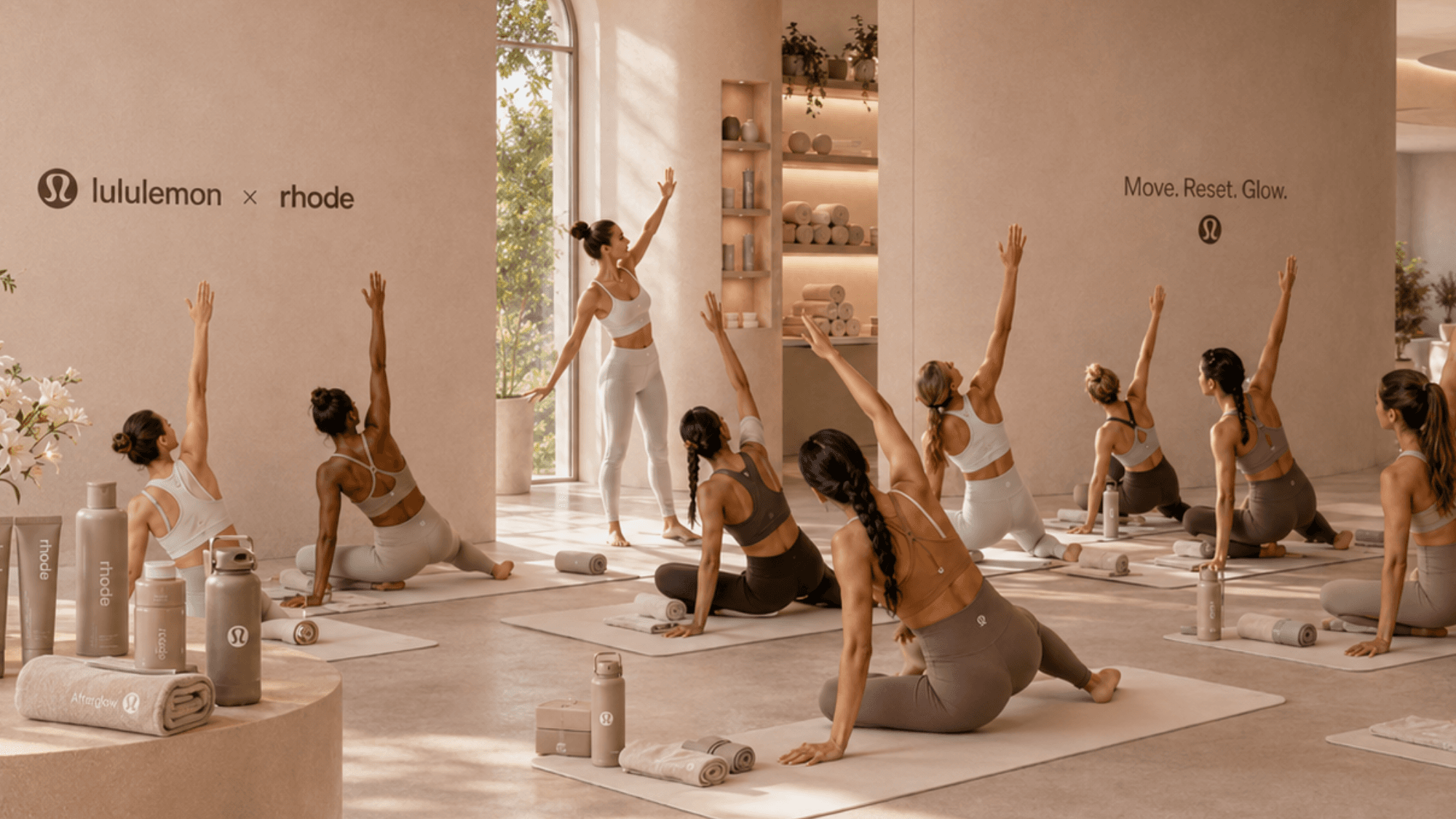
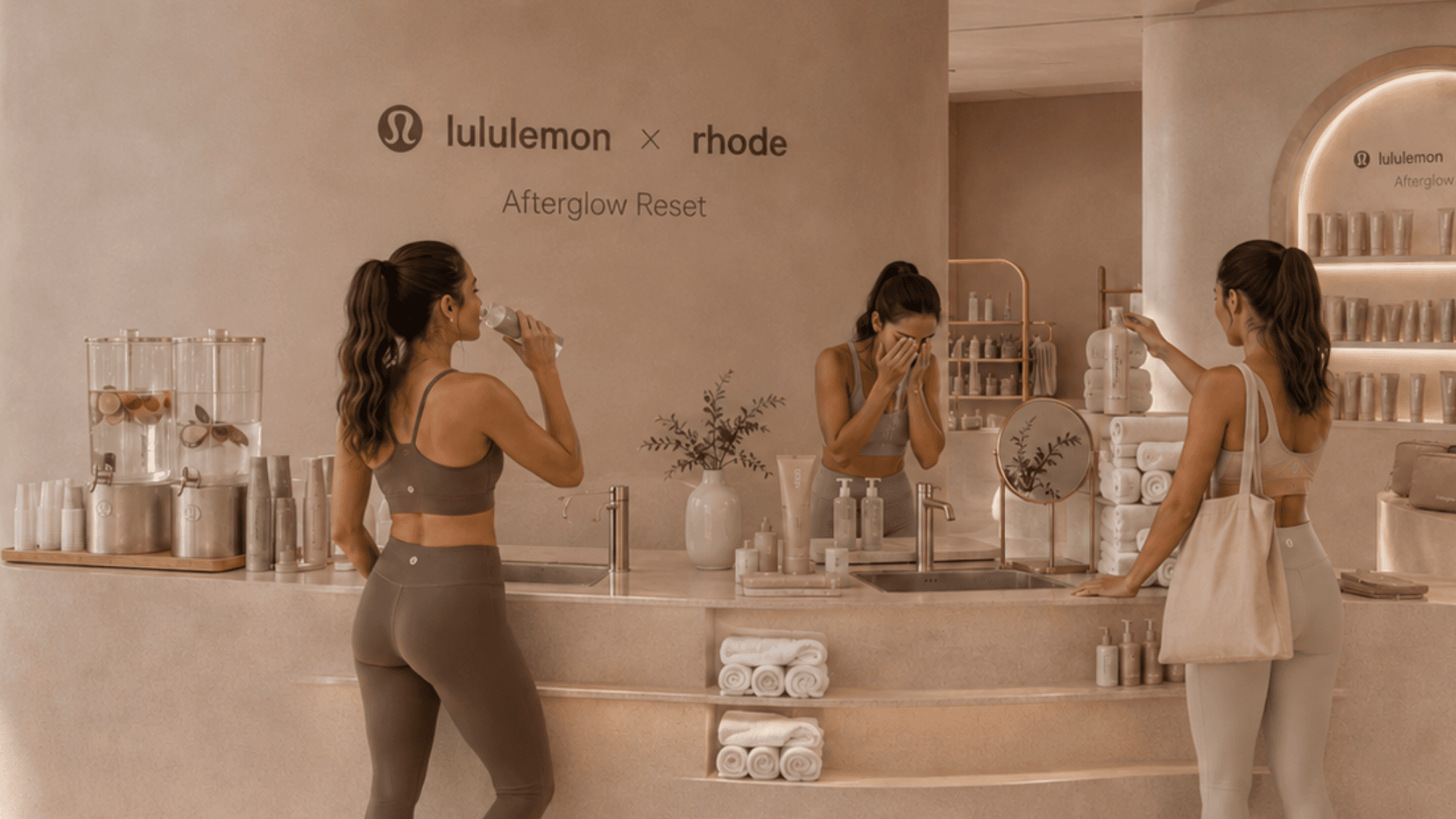
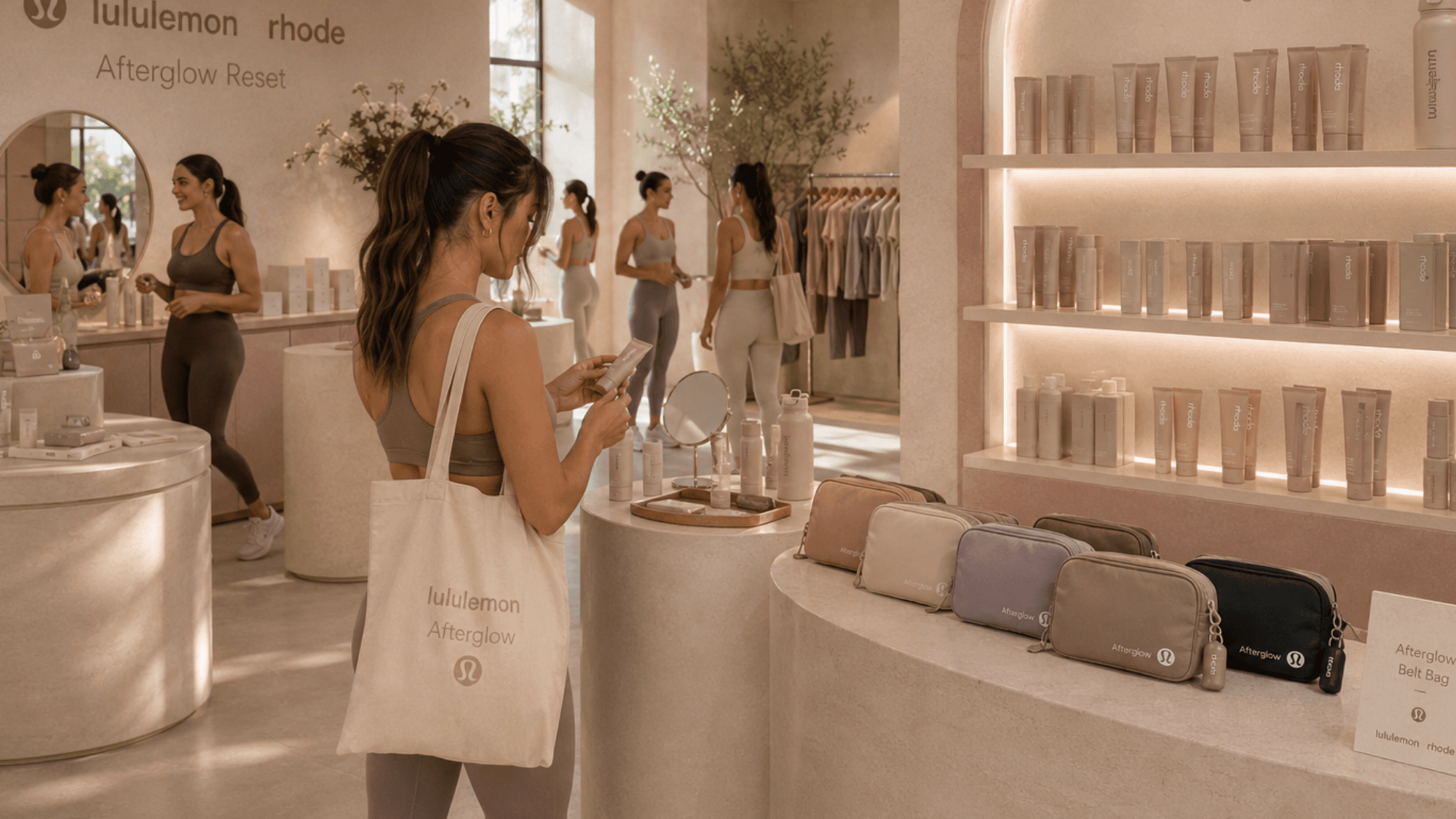
Why the experience exists: Participation → Trial → Data → Commerce → Content. The pop-up is not just an awareness stunt; it makes the ritual experiential and shoppable.
10 / Integrated Channel System
Build a path from attention to action.
Every channel has a job. The campaign does not need to appear everywhere; each touchpoint should move the consumer toward a clear next action.
Watch → Explore
Engage → Visit
RSVP → Shop
Join → Purchase
Learn → Shop
Try → Scan → Buy
Follow the ritual
Discover
Save → Explore
Experience → Convert
“What's The Afterglow Club?”
“Why does this exist?”
“I want access.”
“I understand the ritual.”
“I want the product.”
“This is my routine.”
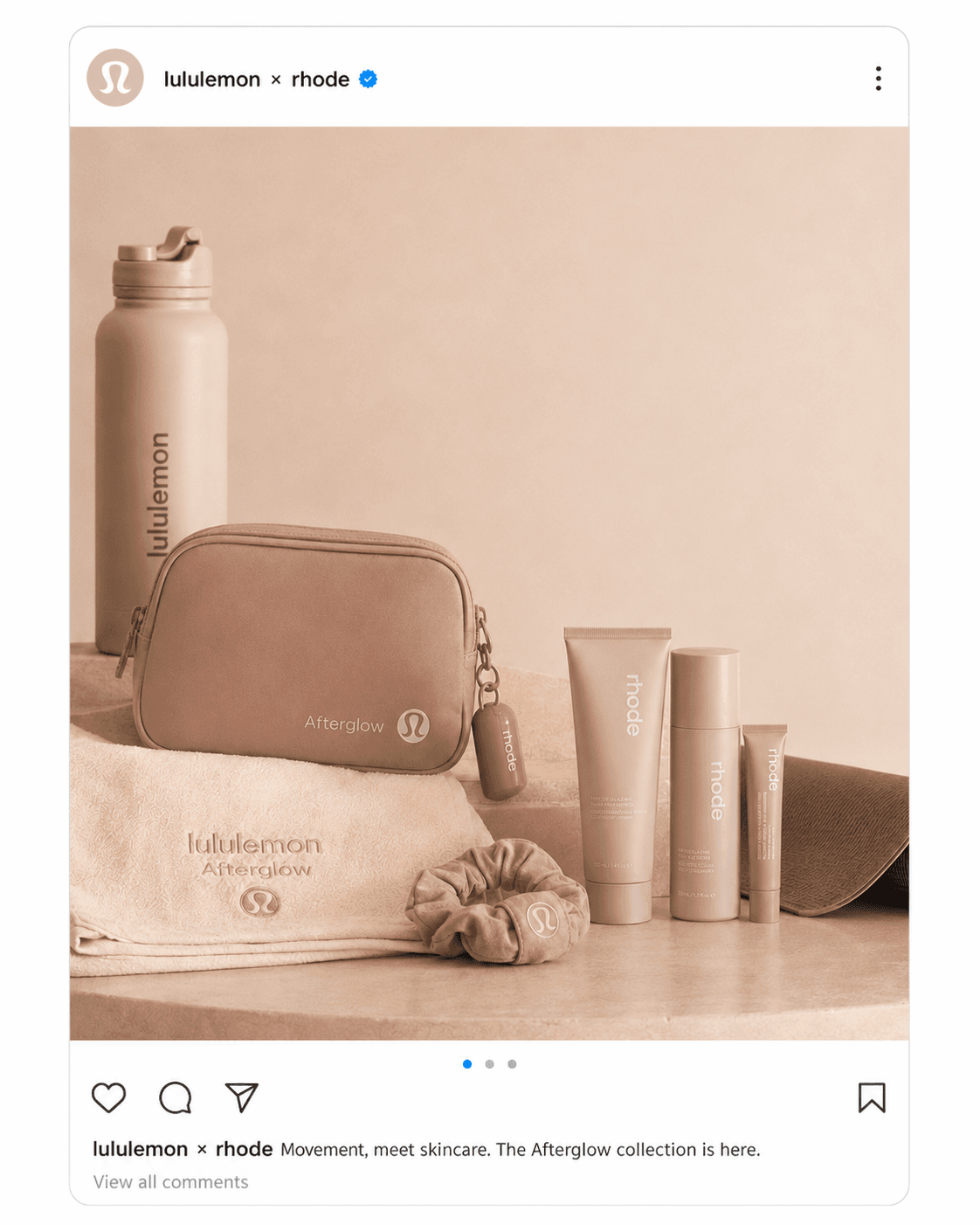
Social / Instagram Carousel
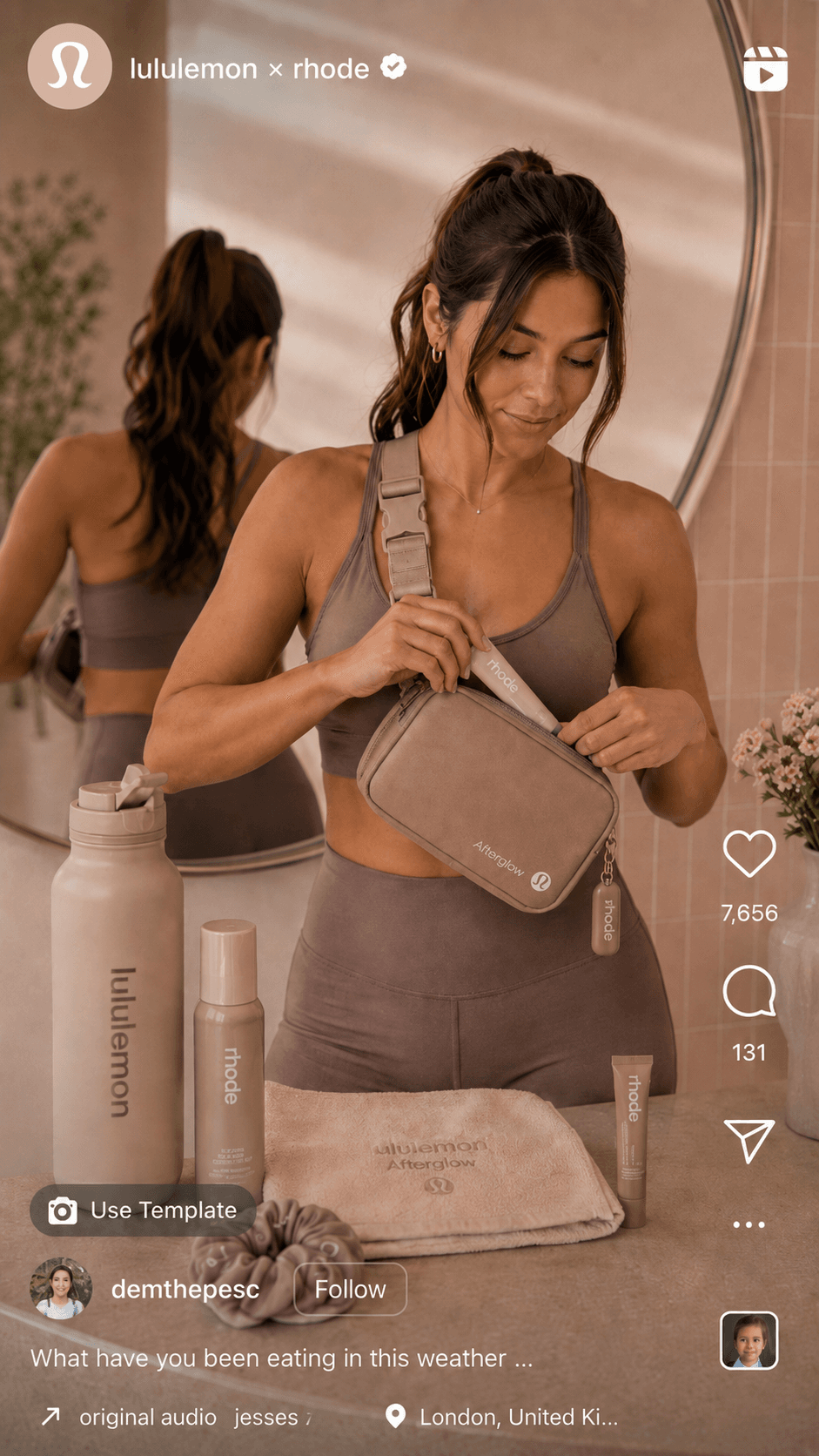
Creator / Reel
Owned / Digital Hub
Conversion rule: No dead-end awareness. Every touchpoint gives the consumer a clear next move.
11 / Launch Plan
Launch with momentum.
An 8-week integrated rollout builds curiosity before asking for conversion.
Excludes product manufacturing, inventory and internal brand labor.
Why this mix: 55% goes to creators + paid amplification because the campaign introduces a behavior consumers need to see demonstrated. Experiential receives the next-largest share because participation makes the behavior tangible.
12 / Measurement
Define what success looks like.
Success is not one viral post. The campaign is measured across the journey: Awareness → Intent → Experience → Commerce → Advocacy.
Measure: Reach · Video Views · Earned Mentions
Measure: Likes · Comments · Saves · Shares · Completion Rate
Measure: Landing-Page Conversion · Email/SMS Opt-In · RSVP
Measure: Reservations · Check-Ins · Sampling · QR Scans
Measure: UGC · Organic Mentions · Shares · Sentiment
Commerce target: 70% illustrative 14-day sell-through and 90% illustrative 30-day sell-through. Measure product views, add-to-cart, conversion and sell-through.
All targets are illustrative planning benchmarks—not actual campaign results.
13 / Strategic Guardrails
Keep the collaboration useful—not just aesthetic.
lululemon owns the movement. rhode owns the glow. The Afterglow Club owns the ritual in between.
14 / Limitations
Independent speculative campaign concept.
The Afterglow Club was created independently for portfolio purposes. It was not commissioned, approved, implemented or endorsed by lululemon, rhode or e.l.f. Beauty. Commercial figures, media investment, launch assumptions and performance targets shown in this case study are illustrative planning benchmarks rather than achieved results.